Designing Modular Locker Systems That Are Built to Last and Easy to Repair
Public-use infrastructure faces a very different set of engineering challenges to controlled clinical or laboratory environments. Products installed in transport hubs, leisure centres, schools and commercial facilities must withstand constant use, accidental damage, deliberate vandalism and years of environmental wear. Designing for these conditions requires more than strength alone. It demands intelligent engineering decisions that balance robustness, maintainability and long-term cost control.
Cambridge Design Technology (CDT) was engaged to develop a modular locker system capable of thriving in exactly these conditions. Drawing on its expertise in product design & development, CDT applied a systems-led engineering approach to ensure the solution would perform reliably in demanding public environments. The result demonstrates CDT’s expertise in designing durable, serviceable infrastructure products where longevity and ease of maintenance are engineered in from the outset.
Understanding Real-World Abuse in Public Environments
Locker systems in public spaces experience high traffic volumes and unpredictable use. Doors are frequently slammed, hinges are overloaded, locks are tampered with and panels are subjected to impact. In many installations, the cost of maintenance and replacement over the product’s life can far exceed the initial manufacturing cost.
Traditional locker designs often treat durability as a matter of simply increasing material thickness or reinforcing every component. While this can improve short-term strength, it does not always address long-term maintainability. When damage occurs, entire carcasses may need replacing, leading to higher lifecycle costs and significant operational disruption.
CDT approached the challenge differently. Instead of designing an indestructible system, the team focused on controlled durability, ensuring that damage could be isolated, repaired and resolved quickly without compromising the structural integrity of the overall installation.
A Modular Architecture for Long-Term Flexibility
At the heart of the solution is a fully modular locker architecture, shaped through CDT’s Industrial Design & Engineering capabilities. Individual compartments are designed as repeatable units that can be configured in multiple layouts to suit different site requirements. This modularity provides installation flexibility, but more importantly, it simplifies maintenance.
Damaged components can be removed and replaced without dismantling the entire bank of lockers. Doors, hinges and selected panels are designed as serviceable modules, reducing downtime in busy facilities. This approach supports facilities managers who require predictable maintenance processes and minimal disruption to users.
By reducing the need for whole-system replacement, the modular strategy significantly lowers lifetime ownership costs while extending usable product life.
Patented Hinge System Enabling Rapid Door Replacement
One of the most common failure points in public lockers is the door hinge assembly. Repeated impact and misuse place substantial stress on hinge mechanisms, often leading to misalignment or breakage.
CDT developed a patented hinge system specifically to address this issue, applying rigorous mechanical engineering principles and design for manufacture expertise to ensure both durability and efficient production. The hinge allows fast, straightforward door removal and replacement without specialist tooling or complex disassembly. In the event of vandalism or damage, maintenance teams can swap out a door quickly, restoring the locker to service with minimal downtime.
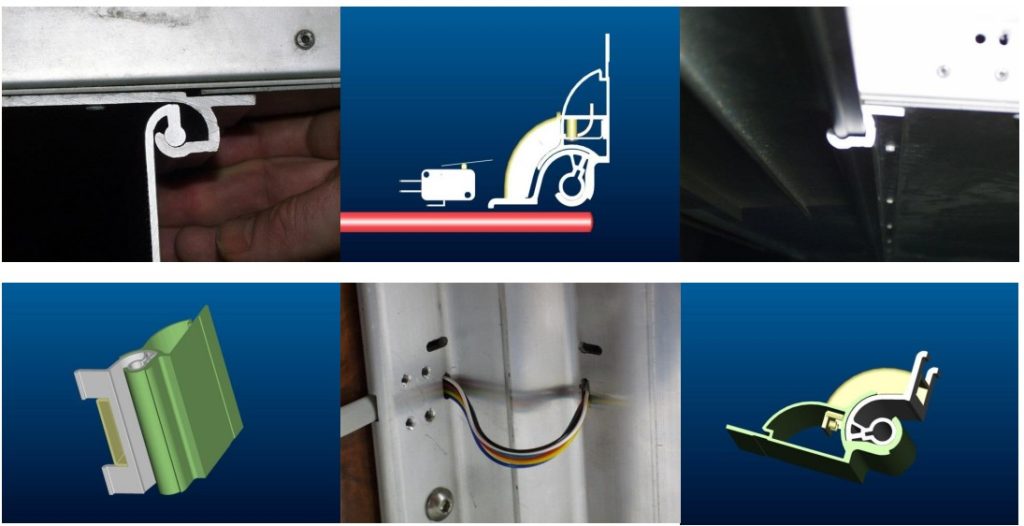
Crucially, the hinge design balances strength with serviceability. It provides the rigidity required for daily heavy use while enabling rapid component exchange when necessary. This dual focus reflects CDT’s wider engineering philosophy: durability must always be considered alongside real-world maintenance requirements.
Designing Rugged Systems with Intentional Weak Points
A key innovation in the locker system is the concept of engineered sacrificial components. Rather than attempting to make every element withstand extreme abuse indefinitely, CDT introduced intentional weak points within selected components.
These controlled failure features are designed to absorb excessive force, protecting the main superstructure from structural damage. In practice, this means that under extreme misuse, a replaceable element may fail first, preventing deformation or cracking of the primary frame.
This strategy protects the integrity of the installation while ensuring that any failure is limited, predictable and inexpensive to rectify. It is a principle widely applied in high-performance engineering sectors, adapted here for public infrastructure.
Protecting the Superstructure Through Intelligent Load Paths
The superstructure of the locker bank, including its primary frame and load-bearing elements, is engineered for long-term stability. Structural analysis and verification activities were supported by CDT’s Mechanical Engineering & Analysis expertise. CDT analysed load paths created by door slamming, torsional forces and user interaction to ensure stresses are directed away from critical structural interfaces.
By separating structural strength from sacrificial components, the system maintains alignment and rigidity even after years of service. The result is a product that remains secure and visually consistent, rather than progressively degrading through cumulative minor damage.
Reducing Lifecycle Costs Through Smart Engineering
For operators of public facilities, the true cost of locker systems is measured over years, not months. Frequent full-unit replacements, extended downtime and labour-intensive repairs all add to operational expense.
CDT’s modular design approach reduces whole-system replacement risk, simplifies spares management and enables targeted repairs. Facilities teams can stock standardised replacement parts and carry out rapid interventions without specialist support.
This focus on maintainability and cost control positions CDT not simply as a product design consultancy, but as an engineering partner capable of delivering commercially sustainable solutions for infrastructure environments.
Engineering for Longevity and Maintainability
The modular locker system project demonstrates Cambridge Design Technology’s capability in designing robust public-use products that combine durability with intelligent serviceability. By integrating modular architecture, a patented hinge system and engineered sacrificial components, CDT created a solution built to withstand heavy use while remaining straightforward to maintain.
If you are developing infrastructure products for demanding environments and require a design partner experienced in durability engineering, modular product architecture and long-term cost optimisation, explore CDT’s Product Design & Development Services, learn more about Industrial Design Services, or discover how their Design for Manufacture & Assembly expertise can support efficient production. Contact Cambridge Design Technology to discuss how they can support your next infrastructure or public-use product development project.